horologica
repairing a broken barrel tooth
When a clock is poorly maintained, pivot holes wear through the lack of lubrication. The wear tends to make them oval and this leads to wheels slowly drifting apart. Sometimes, a tooth might then become bent. The books will tell you that a single tooth can be straightened with a well-placed screwdriver but some brass becomes brittle so the tooth is weakened and attempts to straighten can often lead to it breaking off, particularly one in a mainspring barrel.
For a good quality clock, the wheel can be unsoldered from the barrel, and a new one cut and soldered back. But if you want to keep it as original as possible, or simply can't afford a new wheel, the damaged tooth can be filed out and a new piece of brass soldered in and filed to shape. But if you don't have the skills, here's an inexpensive alternative. I can already hear cries of "bodging it" from purists!
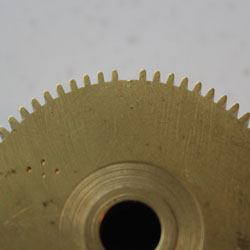
First, remove the mainspring. Don't even think about trying to repair the tooth with the mainspring still inside - it will damage your tools, the spring, as well as the barrel. You need to check the condition of the mainspring anyway, so remove it before you start and that way it won't end up covered in steel and brass filings. Next file the broken tooth away completely. Don't get over-zealous but do make it clean (Image 1).
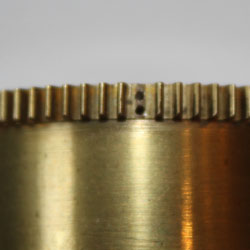
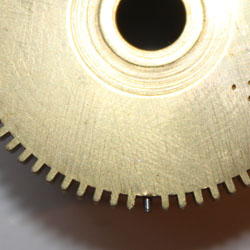
Using a micro drill (handheld, if you don't have a stand), drill two holes where the tooth was. Keep them in line and well away from the edge, and make sure that the holes are about the same width as a tooth (Image 2).
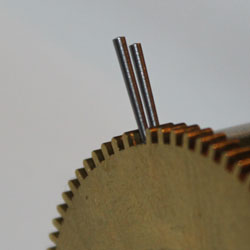
Next find two steel pins to fit the holes. They don't have to be hardened carbon steel; clockmakers' taper pins (mild steel) are perfect. Gently tap them into the holes with a small hammer until they are tight. You can, if you wish, use a drop of Loctite (or even superglue) just to make sure they are permanent. It doesn't matter that they are too long (Image 3).
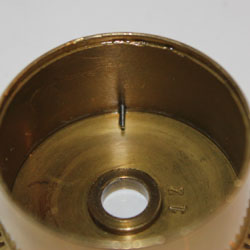
Next, cut the excess length off using a decent pair of cutters. The type used by piano tuners to cut piano wire are a worthwhile investment if you intend to take up clock repairing. Make sure you don't cut them too short - you can file them down if they're too long. Don't forget that there will also be some excess inside the barrel, too (Image 4). Cut it out and create a smooth finish for the mainspring by grinding away any rough edges.
Finally, using a small riffler file, file both steel pins to the same profile as the surrounding brass teeth. Swiss riffler files are another sound investment; pay for good quality ones and you will be more likely to look after them - they'll last a lifetime. Take it one stroke at a time and check until the profile matches (Image 5).
Now, rinse it thoroughly in hot soapy water to remove all the swarf and filings. Dry it properly, using a hairdrier if you like. Then I usually leave the mainspring out and put the winding arbor back, fit the end cap and test it in the plates with the next wheel to make sure it runs smoothly, true and effortlessly. Only then do I dismantle it again, clean, grease and refit the mainspring and begin to reassemble the clock.
I don't pretend that this is an ideal solution or an approved one but it can get you out of trouble if you're having to work to a tight budget.