horologica
Seiko chiming movement
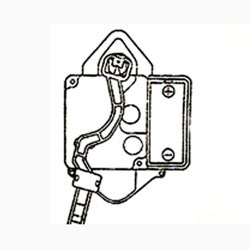
Seiko's quartz movement with pendulum and variable chime is simpler to set up than it looks. As Image 1 shows, it takes a 1.5v C-cell battery (LR14 aka MN1400); the positive (+) terminal is at the top. This illustration shows the version with a pendulum. The other images are of the version without a pendulum so that you can see the controls better but both versions are controlled the same way.
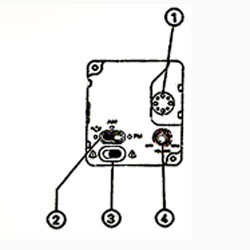
Image 2 is a diagram showing:
1. the hand setting wheel
2. the night-time silence on/off switch
3. The Westminster/Whittington melody switch
4. the volume wheel
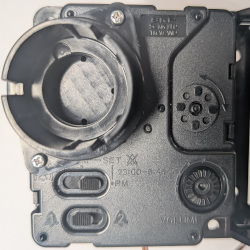
And Image 3 shows a closer view of the actual movement to illustrate the controls.
When setting the time, turn the wheel (1) counter-clockwise to make the hands move clockwise - counter-intuitive, I know, but I didn't design it. You should not turn the hands backwards.
The night-time silence option allows you to set the chime to sound all day and night but if activated, the clock will run silent after 23:00pm until 05:45am. This silent period cannot be changed or extended. To use it, first set your clock to the current correct time if you have not already done so. Then, if the current time is during the AM hours, slide switch (2) to the middle position marked "AM". (Conversely, if the current time is during the PM hours, slide switch (2) to the right position marked "PM"). That's it.
Every time the melody selector switch (3) is shifted, the corresponding chime will start to ring out. Select the chime you wish to hear. The left position is Westminster and the right is Whittington. The chime will sync correctly and play the Westminster quarter hour chimes after the clock has been running 90 minutes.
If your chime doesn't count the correct hour:
1) Take out the battery
2) Set the time to 5:50 AM
3) Replace the battery in the cavity.
4) Set the time with the hands moving clockwise to the correct time.
5) The chime will sync correctly and play the quarter hour chimes
after
the clock has been running 90 minutes.
You can adjust the chime volume by turning the volume control wheel (4) toward max for louder or toward the "min" position for a softer level.